Understanding Threat Detection Results in Cybersecurity

Understanding Threat Detection Results in Cybersecurity
In cybersecurity, accurate threat detection and identification are critical. Security tools such as antivirus software, firewalls, and intrusion detection/prevention systems (IDS/IPS) are designed to detect threats and vulnerabilities to protect systems and networks. However, detection outcomes are not always perfect.
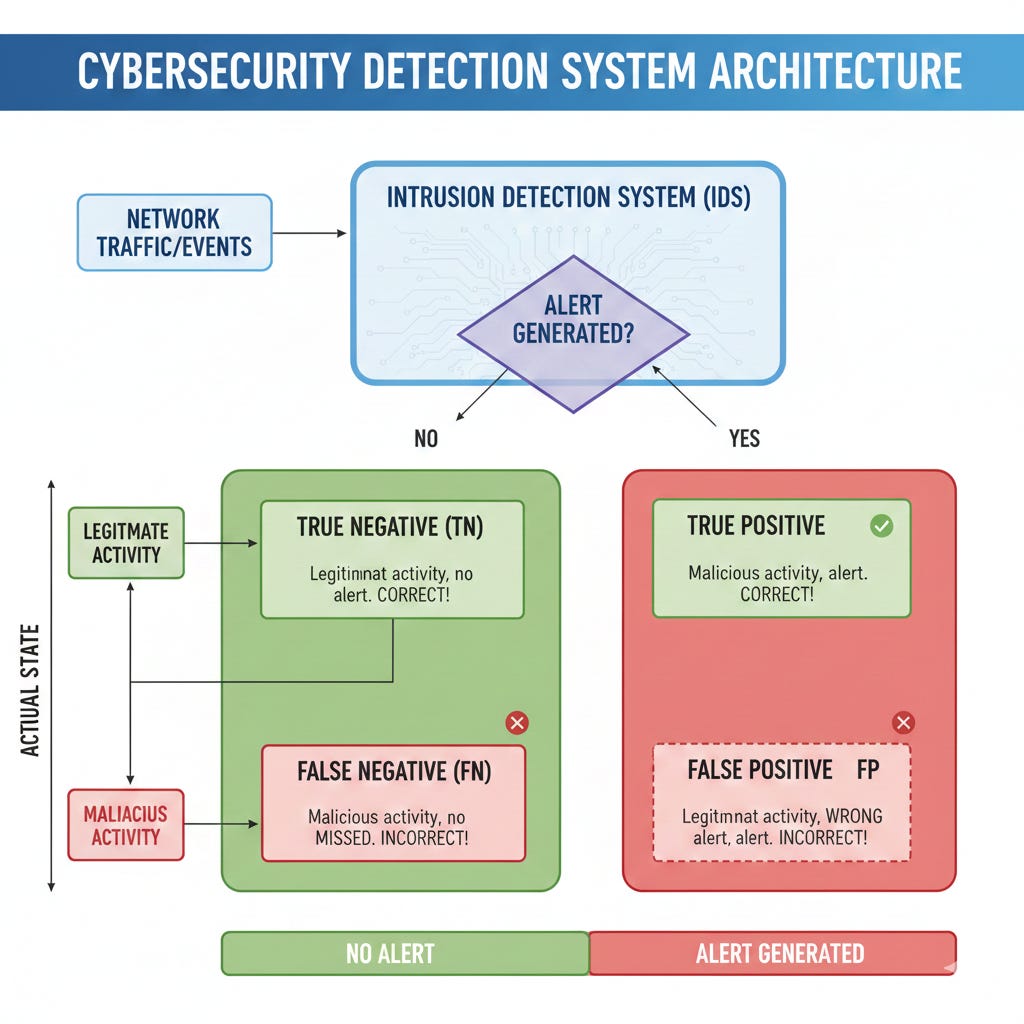
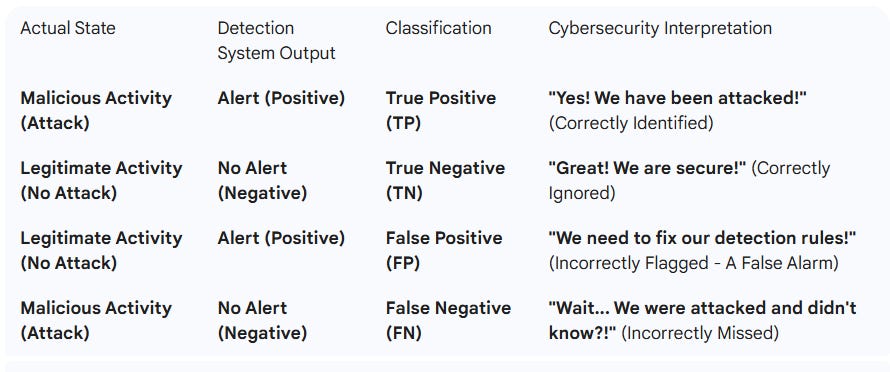
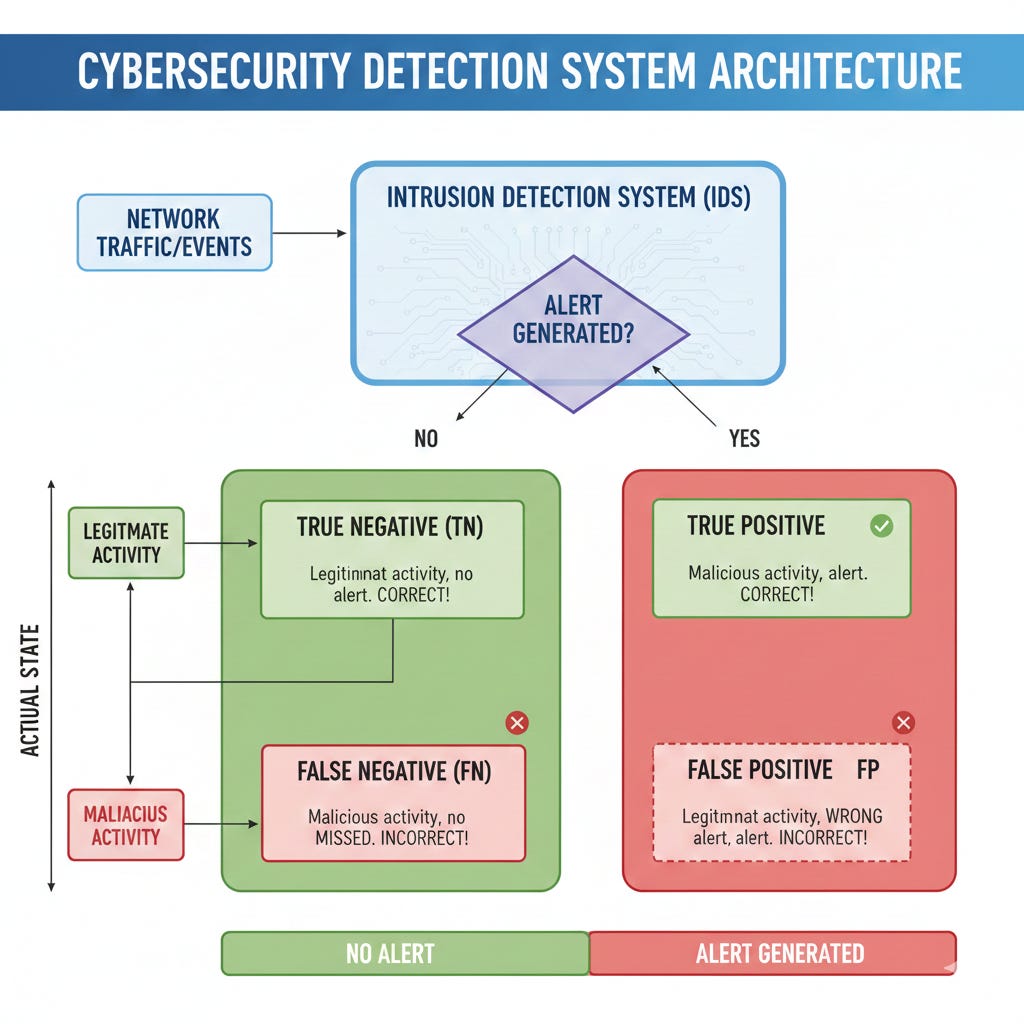
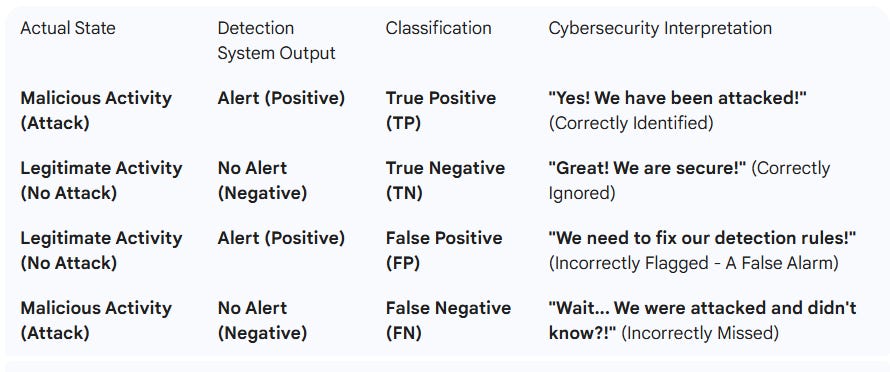
Traditionally, detection results were categorized as True Positive (TP), True Negative (TN), False Positive (FP), and False Negative (FN). Later, the category Benign was introduced to better classify harmless activities that are correctly detected. Below is a simple explanation of each type, along with practical examples.
True Positive (TP)
A True Positive occurs when a security system correctly identifies a real threat or vulnerability. The system accurately detects malicious activity and takes appropriate action to block or mitigate it.
Example:
If an IDS successfully detects and reports an actual cyberattack attempt, this is considered a True Positive. These results are essential for maintaining strong security.
True Negative (TN)
A True Negative occurs when the system correctly determines that no threat exists and therefore takes no action.
Example:
If antivirus software scans a clean file and correctly confirms it is not infected, the result is a True Negative. This helps avoid unnecessary alerts and operational overhead.
False Positive (FP)
A False Positive happens when the system incorrectly flags normal, legitimate activity as a threat.
Example:
If an IDS marks normal network traffic as malicious, this is a False Positive. These results can waste time and resources and may lead to alert fatigue.
False Negative (FN)
A False Negative occurs when the system fails to detect an actual threat.
Example:
If antivirus software scans an infected file but fails to identify the malware, this is a False Negative. This is dangerous because real threats can go unnoticed.
Benign (Neutral)
A Benign result refers to activity that is detected and analyzed but correctly determined to be harmless.
Example:
If an IDS detects traffic, inspects it, and correctly classifies it as safe and legitimate, it is considered a Benign result. This category helps improve detection accuracy and reduces unnecessary escalations.
Key Differences
False Positives vs Benign Results
False Positives = Incorrect detections.
Benign Results = Correct detections of harmless activity.
Benign vs True Negative
Benign = Activity was detected, analyzed, and found harmless.
True Negative = No suspicious activity was detected at all